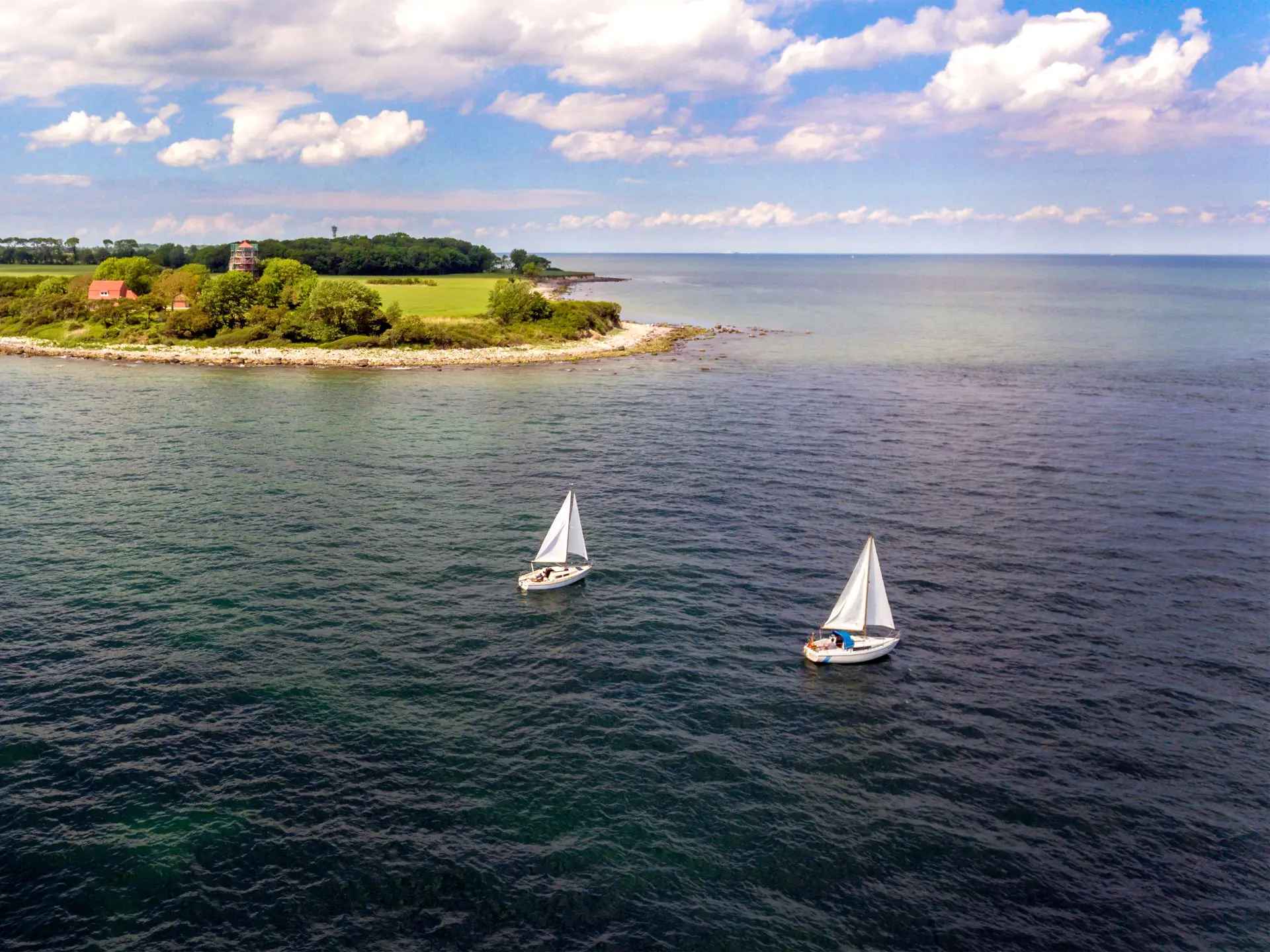
Yacht charter in the Baltic Sea: set sail from Flensburg, Heiligenhafen, or Barth
A yacht charter in the Baltic can take many different forms. From Flensburg, the natural course leads into the Flensburg Fjord and on to the islands of southern Denmark. Heiligenhafen opens up cruising options around Fehmarn and throughout the western Baltic. Barth gives access to the Bodden waters, Hiddensee, Stralsund, and Rügen, a sailing area where more sheltered waters and the open Baltic lie close together.
Your choice of charter base therefore plays a major role in shaping the character of your sailing holiday. Crew experience, preferred daily distances, the yacht’s draught, and the weather should also form part of this decision. If your travel dates and crew size are already fixed, you can search directly for currently available yachts.
Why is the Baltic Sea a good choice for yacht charter?
The Baltic Sea is highly suited to yacht charter, as different charter bases allow for very different cruising itineraries. From Flensburg, the focus is on the Flensburg Fjord and the Danish island areas. Heiligenhafen is an excellent starting point for Fehmarn and the western Baltic. From Barth, route options lead through the Bodden waters and onwards towards Hiddensee, Stralsund, and Rügen. This creates a broad range of possibilities, from more sheltered waters to open Baltic passages.
Which area best suits your crew depends on sailing experience, preferred passage lengths, the yacht itself, draught, and weather conditions. Especially on the Baltic, it pays to keep route planning flexible and to include alternative harbours. Families, smaller crews, and experienced sailors may therefore choose very different cruising priorities. Availability for your preferred dates must always be checked in real time.
Flensburg, Heiligenhafen, or Barth: which charter base is right for you?
First Class Sailing’s three Baltic bases open up distinctly different cruising grounds. Flensburg is particularly appealing if Denmark and island hopping are part of your plans. Heiligenhafen is ideally located for Fehmarn and a variety of routes through the western Baltic. Barth is the starting point for a clearly different kind of sailing area, shaped by the Bodden, Hiddensee, Stralsund, and Rügen.
| Base | Best suited to | Cruising character | Typical sailing areas | Planning considerations |
|---|---|---|---|---|
| Flensburg | Crews interested in Denmark and island hopping | Fjord sailing, coastal and island cruising, cross border passages | Flensburg Fjord, Sønderborg, Als, Ærø, South Funen | Weather dependent choice between several harbours and islands |
| Heiligenhafen | Crews focused on Fehmarn and the western Baltic | Coastal sailing and more open Baltic cruising | Fehmarn, western Baltic, German Baltic coast, and depending on the itinerary also Danish destinations | Wind direction and sea state have a strong influence on sensible route planning |
| Barth | Crews interested in the Bodden, Hiddensee, and Rügen | A mix of Bodden waters, buoyed channels, and open Baltic sailing | Barther Bodden, Darß and Zingst, Hiddensee, Stralsund, Rügen | Take draught, navigational channels, local restrictions, and where relevant bridges into account |
OUR BASES IN THE BALTIC SEA
Yacht charter from Flensburg: fjord sailing and the Danish islands
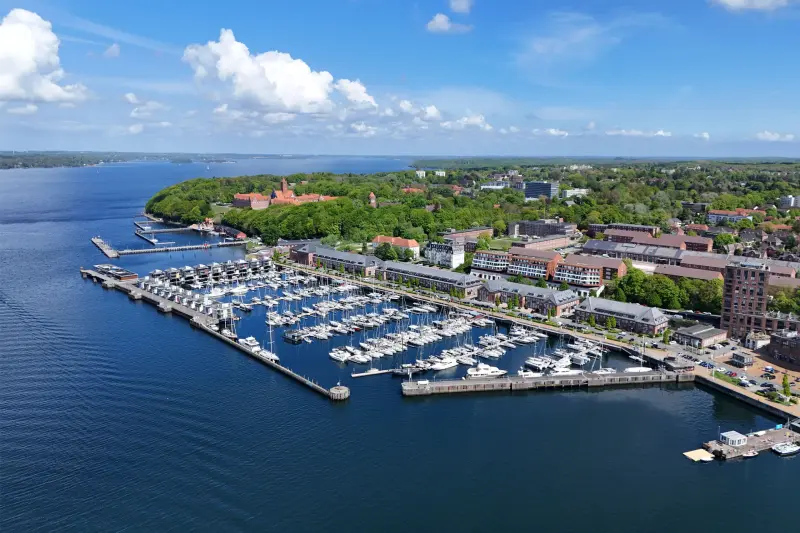
Flensburg is located directly on the German Danish border. The Flensburg Fjord alone offers a distinctive cruising character, and in suitable conditions the journey can continue towards Sønderborg and Als. For crews looking for Danish island hopping, Ærø with Marstal and Ærøskøbing, along with other destinations in the South Funen area, are particularly appealing.
The strength of this departure point lies in the variety of possible directions and harbours. As a result, your itinerary does not need to revolve around a long list of fixed destinations. Wind, weather, and crew preferences can play a much greater role in deciding which island or harbour makes the most sense next.
Flensburg is therefore especially well suited to crews who would like to combine German and Danish waters within one sailing holiday. How far the cruise actually extends into South Funen or the wider Danish islands should depend on the charter duration available, the weather, and the crew’s level of experience.
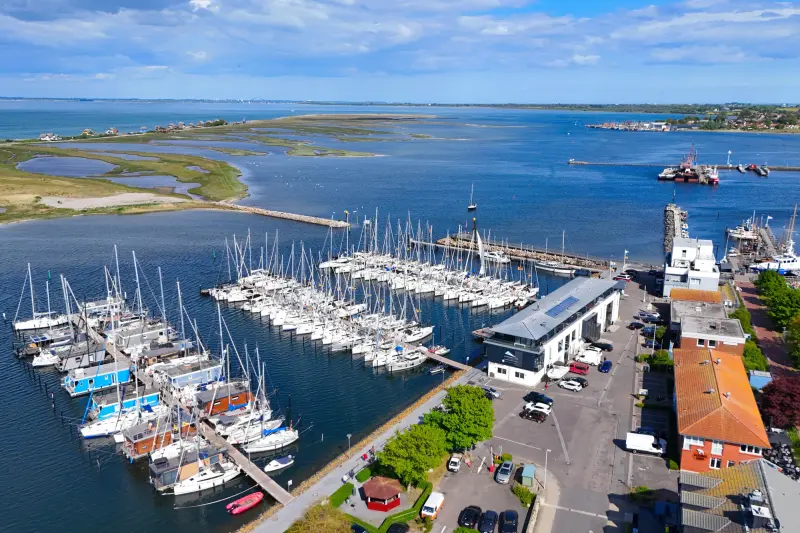
Heiligenhafen: Fehmarn and the western Baltic
Heiligenhafen offers a different starting point. Fehmarn lies right on the doorstep, while various routes along the German Baltic coast and through the western Baltic are easily within reach. For longer or carefully planned itineraries, Danish destinations may also be worth considering.
For many crews, the appeal of this area lies in classic Baltic sailing, with coastal stretches and passages across more open water. This makes weather planning especially important. Wind direction and wind strength determine which route is comfortable and practical, and when an alternative may be the better option.
First Class Sailing has its roots in Heiligenhafen. This base is particularly well suited to crews whose focus is on Fehmarn, the western Baltic, and sailing along the German coast.
Barth: Bodden, Hiddensee, and Rügen
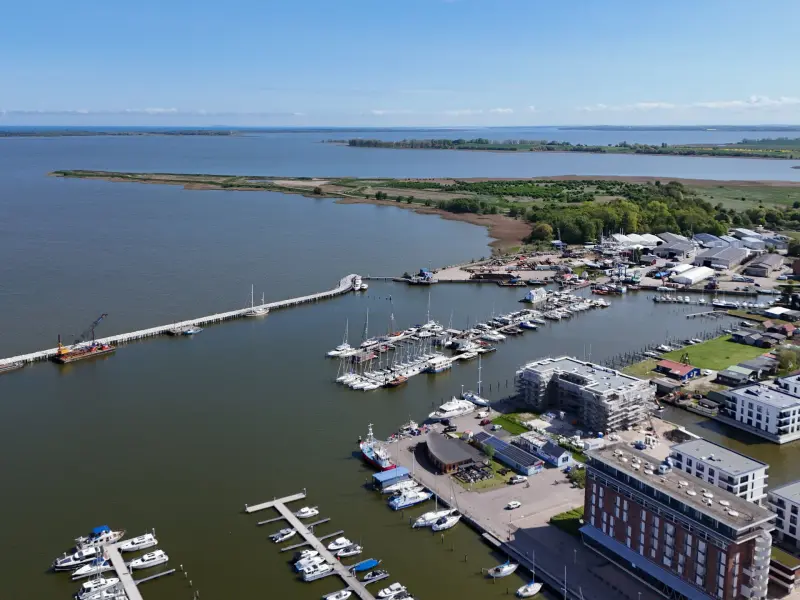
The sailing area from Barth differs markedly from the western Baltic bases. The Barther Bodden, Darß, and Zingst shape the opening leg. Depending on the route, the yacht, and the conditions, Hiddensee, Stralsund, the Strelasund, Rügen, and other waters in the region may also be included.
The Bodden waters are in some areas better sheltered from swell than the open Baltic. In return, cruise planning brings different demands. Shallow water depths, buoyed channels, and the yacht’s draught can determine which routes are feasible. Around Stralsund, bridge passages may also be relevant. Current opening times and navigational information should therefore form part of your detailed passage planning.
Nature conservation also plays a practical role in the Western Pomerania Lagoon Area. Protected zones are subject to navigation rules. Current charts, official notices, and local guidance should therefore be taken into account before and during the cruise.
Barth is therefore especially attractive for crews who want to alternate between lagoon style waters and open Baltic sailing, and who are prepared to give greater attention to draught and navigational channels in their planning.
Which Baltic cruising area suits which crew?
Families with children
For a family cruise, manageable daily passages, alternative harbours, and sufficient time in hand are often more important than covering a wide area. The yacht’s layout, safe procedures on deck, and the option to shorten a leg in unfavourable weather should also be part of the decision. A more sheltered stretch of water can be particularly pleasant, although it does not remove the need for careful navigation.
First yacht charter in the Baltic
The Baltic cannot simply be described as either easy or difficult. A short hop in more sheltered waters places very different demands on a crew than a longer open passage. Less experienced crews should plan conservatively, keep several harbour options open, and choose a yacht whose size and handling characteristics match their level of experience.
Experienced sailors
Experienced crews can place greater emphasis on open passages, longer legs, and a wider cruising range. Above all, experience creates additional options. Even so, weather windows, the return passage, reserve days, and a realistic assessment of the crew remain decisive factors.
Sailing yacht, catamaran, or motor yacht for the Baltic?
For a classic sailing holiday in the Baltic, the sailing yacht remains the natural choice. Size, draught, handling characteristics, number of cabins, and sail plan should all suit both the crew and the intended sailing area. In the Bodden waters in particular, draught may play a more important role in the selection process than on an itinerary that mainly crosses deeper open water. Suitable sailing yachts can be compared by date and requirements.
Catamarans offer generous living space and ample deck area, but because of their beam they require different berthing arrangements and handle very differently in harbour from a monohull yacht. Whether a catamaran is available at your chosen Baltic base and whether it is suitable for your planned cruise should always be checked for the specific dates.
Motor yachts make different cruising speeds and itinerary styles possible. In return, fuel consumption and running costs become more significant. Here too, actual availability at your preferred base should be confirmed before planning further. An overview is available on the page for motor yachts.
Bareboat or yacht charter with skipper?
A bareboat charter is suitable for crews who hold the required certificates and have sufficient practical experience for both the yacht and the sailing area. Which documents are required in any specific case depends, among other things, on the yacht, the cruising area, the charter conditions, and the applicable regulations.
A skipper can be a sensible choice if practical experience is limited, if the crew wishes to charter a larger or unfamiliar yacht, or if there is uncertainty about the sailing area. The decision should therefore not be based solely on whether a licence is held.
For cruises into Danish waters, additional requirements may apply. Qualification requirements also apply to the operation of marine radio equipment. The necessary documents should therefore be checked before booking for the specific yacht and intended itinerary.
Best time to enjoy a sailing holiday in the Baltic
The charter and sailing season extends well beyond the summer school holidays. Spring and autumn can be appealing for crews who are comfortable with cooler temperatures and can adapt flexibly to changeable conditions. In summer, longer days coincide with high tourist demand.
June, July, and August are the obvious months for many holiday crews. Anyone tied to school holidays or looking for a specific yacht size, cabin layout, or charter base should check availability early. May and September can also be excellent sailing months, although they require a realistic view of temperatures and weather patterns.
Weather and passage planning in the Baltic
The weather should play a central role in shaping your route. Wind direction and wind strength can greatly affect comfort on a passage, especially on more open stretches. Sea state, visibility, and passing weather fronts can also alter a day that was originally planned quite differently.
Good Baltic planning therefore always includes a margin for flexibility. Alternative harbours and shorter legs give the crew the opportunity to respond to the latest marine forecast. A harbour day is a normal planning option, not a failed day of sailing.
Before departure and throughout the cruise, current marine weather reports and warnings should be checked. Long term climate averages are no substitute for an up to date forecast.
Navigation, draught, and navigational channels
Conditions for navigation vary considerably between the Flensburg Fjord, the open western Baltic, and the Bodden waters. On more open stretches, weather, sea state, and traffic demand greater attention. In shallower waters, draught, channels, and local restrictions may determine the route.
This is particularly relevant for charters from Barth. The combination of shallow waters, marked channels, and protected areas requires a different approach from a straightforward coastal cruise in deeper water. On passages through Stralsund, bridge openings may also need to be factored in.
Detailed navigation should always be prepared on the basis of current charts, nautical publications, weather information, and official notices. General sailing area descriptions on a charter website are not a substitute for these essential resources.
Plan your Baltic cruise realistically
A well planned charter cruise begins with choosing the right sailing area, not with drawing up the longest possible list of harbours. Check in and check out times limit the sailing time actually available. You should also allow for weather reserves, crew comfort, and where relevant time for provisioning or fuel.
The fewer fixed destinations a crew absolutely has to reach, the easier it is to adapt the route to the wind and weather. This is just as valuable for families as it is for ambitious crews. Anyone sailing a yacht with greater draught should review the possible routes in the Bodden area particularly early.
How much does a yacht charter in the Baltic cost?
A fixed weekly price would say very little without specific travel dates and a specific yacht. The charter price depends on the season, base, yacht model, size, number of cabins, year of build, equipment, charter duration, and current availability. The chosen charter format can also affect the total price.
Depending on the offer, additional items may be added to the charter price. These may include, for example, a security deposit or deposit waiver, cleaning or a charter package, bed linen, towels, and any booked extras. During the cruise itself, there are also running costs such as harbour fees, fuel, provisions, and where applicable parking or transport costs.
Which items are mandatory and which can be booked as optional extras depends on the individual yacht offer. For that reason, the total price should be checked on the basis of the selected yacht rather than broad Baltic average figures.
When should you book a Baltic yacht?
Anyone who must travel during the summer holidays or is looking for a specific base, yacht size, or cabin layout benefits from booking early. This usually gives access to a wider choice of dates, bases, and yachts. Even so, early booking does not guarantee the lowest price.
If your dates are flexible, a later search may also work well. In that case, the remaining availability will have a much greater influence on which base, yacht, or cabin layout is still possible. Current options can be viewed in the yacht charter search.
Getting to Flensburg, Heiligenhafen, or Barth
Travel arrangements can influence the choice of charter base, especially for crews arriving from different regions. Flensburg lies in the north of Schleswig Holstein near the Danish border. Heiligenhafen is located on the East Holstein coast and is easy for many guests to reach by car. Barth is in Mecklenburg Western Pomerania, south of the Fischland Darß Zingst peninsula.
If arriving by rail and public transport, it is worth checking the final leg to the charter base as well. For crews arriving with several cars, parking options and any applicable charges should form part of the travel planning. Current details should always be confirmed directly with the relevant base or provider before departure.
Why choose a Baltic yacht charter with First Class Sailing?
First Class Sailing is an owner managed charter company with its roots in Heiligenhafen and more than 50 years of yacht charter experience. The Baltic therefore forms part of the company’s historic core. For 2027, Flensburg, Heiligenhafen, and Barth are the three charter bases in this sailing area.
The Baltic fleet covers a range of yacht types, comfort levels, and price categories. The quality of a charter is not determined by a yacht’s year of build alone. Maintenance, equipment, preparation, and actual condition are equally important. Older yachts in the Baltic fleet in particular receive the technical attention they require.
Personal support begins with choosing the right base and yacht and continues throughout the charter preparation process. If you are undecided between Flensburg, Heiligenhafen, and Barth, First Class Sailing can help you make the choice based on your crew, experience, preferred sailing area, and yacht type.
Find the right yacht for the Baltic
Once your travel dates, crew size, and preferred charter base are set, the next step is to check current availability. Suitable options can be reviewed in the yacht charter search. If you would like to clarify first whether Flensburg, Heiligenhafen, or Barth is the better fit for your crew, this decision can be discussed with First Class Sailing before selecting a specific yacht.
BALTIC SEA FAQ
That depends on the kind of cruise you have in mind. Flensburg offers direct access to the Flensburg Fjord and southern Denmark. Heiligenhafen is an excellent departure point for Fehmarn and the western Baltic. Barth opens up the Bodden waters as well as Hiddensee, Stralsund, and Rügen.
It can be. However, the demands vary considerably depending on the sailing area, the weather, and the route. Less experienced crews should choose moderate passages, keep alternative harbours in mind, and select a yacht they can handle with confidence. Where experience is lacking, a skipper can be a sensible option.
For families, short daily passages, good fallback options, and a yacht that suits the crew’s comfort needs are especially important. The final choice should be based on weather flexibility, the passages planned, and the experience of the adults, rather than labelling any one region as universally family friendly.
Nearby sailing areas include the Flensburg Fjord and the Danish waters around Sønderborg and Als. With suitable passage planning, Ærø and other destinations in the South Funen archipelago can also be included.
Fehmarn and the western Baltic are the main focus. Depending on the charter duration, the weather, and the crew, cruises can also be planned along the German coast or towards Danish waters.
From Barth, the focus is on the Barther Bodden, Darß and Zingst, as well as cruising options towards Hiddensee, Stralsund, and Rügen. Draught, navigational channels, and local access regulations should all be taken into account when choosing a route.
The main holiday period falls in summer, when long days coincide with the holiday season. Late spring and early autumn can also be attractive for flexible crews. Weather, temperatures, and yacht availability should then be considered even more carefully.
Water depth, the yacht’s draught, buoyed channels, and local navigation rules are particularly important here. Additional restrictions may apply in protected areas. Current charts and official information are therefore an essential part of passage planning.