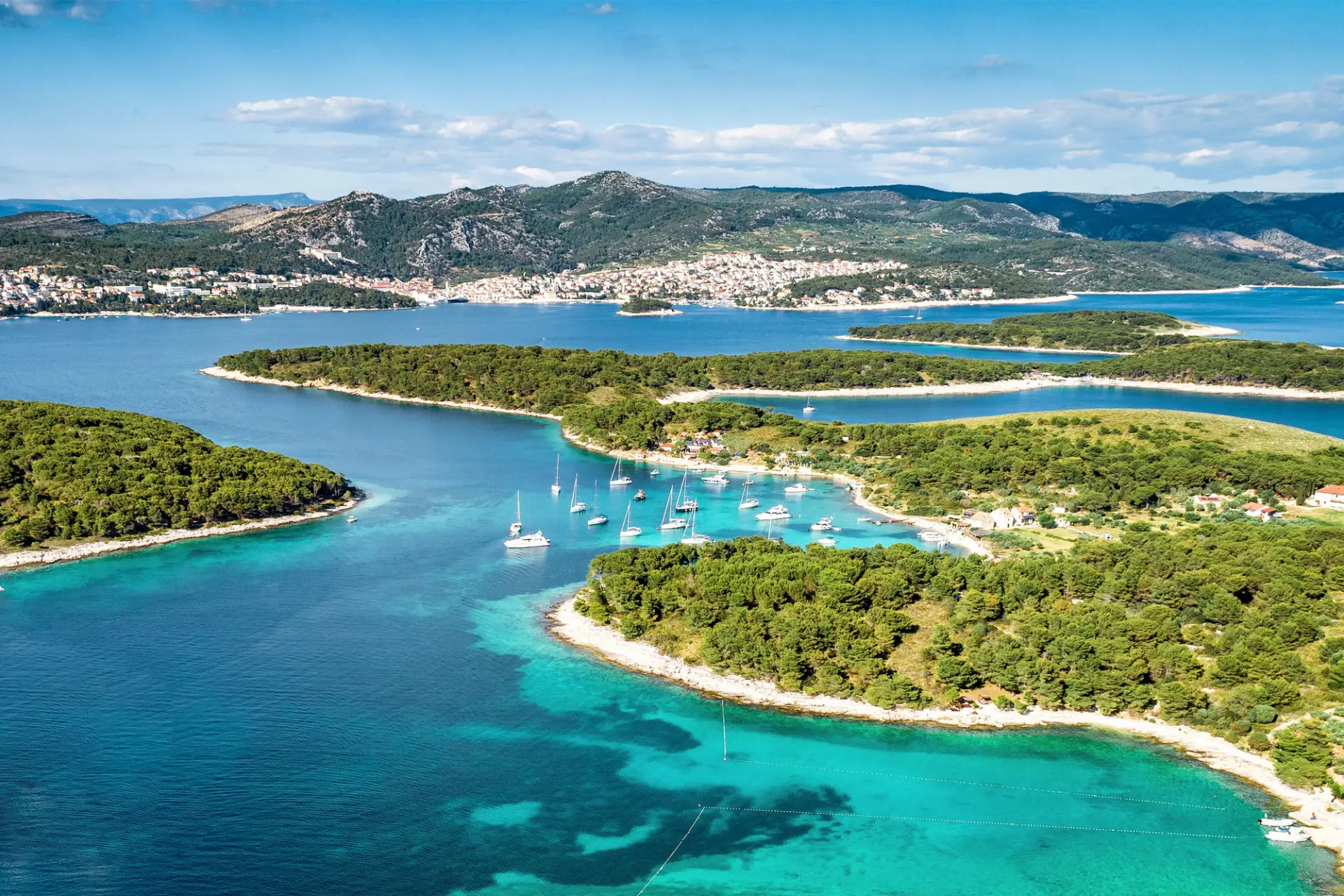
Yacht Charter Croatia: Four Bases for Distinct Sailing Areas
When planning a yacht charter in Croatia, your departure marina will shape the character of the entire voyage. In 2027, First Class Sailing will operate its own charter bases in Pula, Punat, Biograd, and Rogoznica. This gives you four clearly different starting points, from the northern Adriatic to Dalmatia.
Pula is well suited to itineraries along the Istrian coast and towards the Kvarner region. Punat on the island of Krk places you right in the heart of the Kvarner archipelago. From Biograd, the focus shifts to North Dalmatia, Dugi Otok, Telašćica, and the Kornati islands. Rogoznica lies further south and opens up the wider Šibenik area, with parts of Central Dalmatia also within reach when the route is planned accordingly.
The right base therefore depends less on trying to cover the longest possible list of famous islands and more on your crew, travel duration, yacht type, journey to the marina, and the kind of sailing holiday you have in mind. Available yachts for your preferred dates can be compared through the yacht charter search.
Why is Croatia such a good choice for a yacht charter?
Croatia combines several clearly distinct cruising grounds with a dense network of islands and harbours. In 2027, First Class Sailing offers its own charter bases in Pula, Punat, Biograd, and Rogoznica. This creates a broad choice, from Istria and the Kvarner Gulf to North and Central Dalmatia.
Depending on your crew, you can combine short island hops, longer passages, marinas, mooring fields, and anchorages. Sailing yachts and catamarans also allow for different priorities in terms of performance under sail, onboard space, and comfort. Weather conditions, especially the Bora and the Jugo, as well as regulations in protected areas such as the Kornati islands, play an important role in route planning.
The yachts available and the overall cost will depend on your travel dates, chosen base, yacht size, and onboard equipment. For that reason, current availability should always be checked for specific dates.
Which region in Croatia is right for your yacht charter?
The four First Class Sailing bases are located across three clearly different cruising regions. In the north, the focus is on Istria and Kvarner; around Biograd, on the dense island landscape of North Dalmatia; and from Rogoznica, on the transition from the Šibenik archipelago towards Central Dalmatia.
| Region and base | Particularly suitable for | Character of the cruise | Typical cruising grounds | What to bear in mind |
|---|---|---|---|---|
| Pula / Istria | Crews travelling to the northern part of Croatia, and itineraries combining coast and islands | A blend of more open passages and sheltered coastal stretches | Istria, Brijuni, and depending on your route, Cres and Lošinj | Allow for suitable weather windows and Bora conditions on longer passages |
| Punat / Kvarner | Island hopping in the northern Adriatic | An island sailing area with short to medium length passages | Krk, Cres, Rab, Lošinj | Take account of local wind acceleration and sheltered options during Bora conditions |
| Biograd / North Dalmatia | Crews focused on island variety and protected natural areas | Many possible routes and a relatively close knit island structure | Pašman, Ugljan, Dugi Otok, Telašćica, Kornati | Protected area rules, narrow channels, and overnight planning |
| Rogoznica / Šibenik area | Crews wishing to combine North and Central Dalmatia | Islands, coastal harbours, and longer options further south | Šibenik archipelago, Primošten, Zlarin, Žirje, and with sufficient time, further south | Do not overreach with the route, and allow a weather margin |
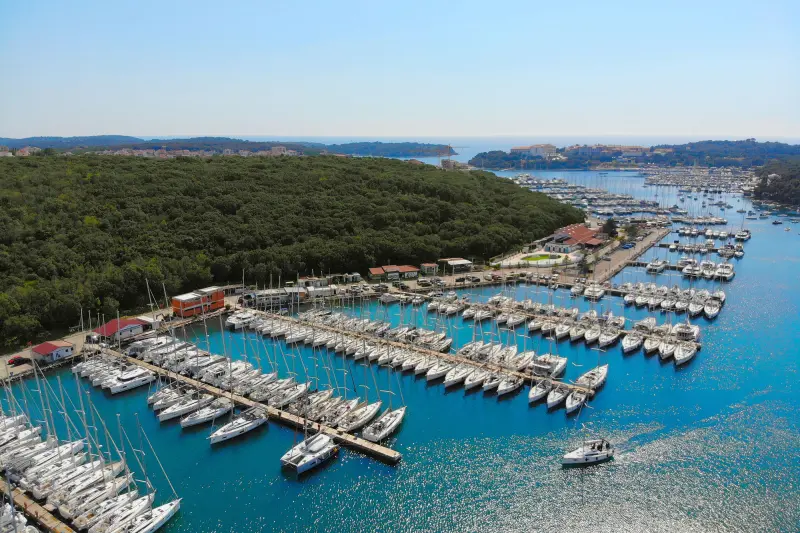
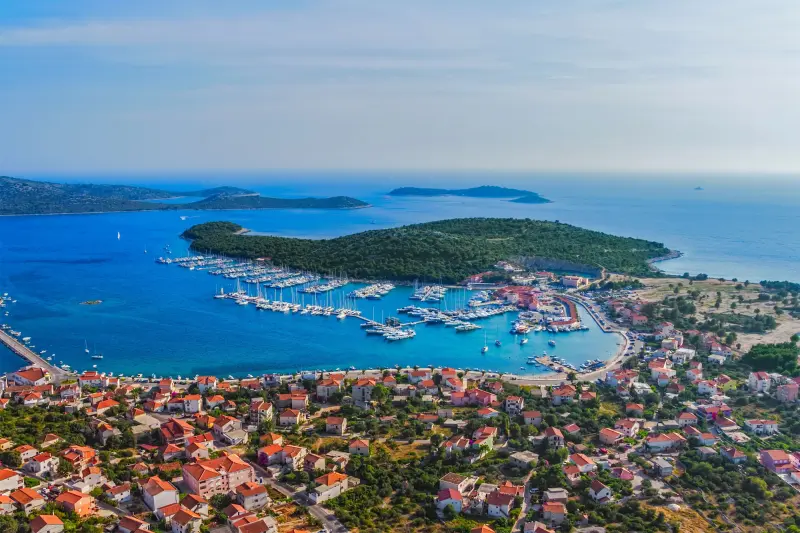
Pula: Yacht Charter Between Istria and the Northern Adriatic
Pula is the northernmost Croatian base operated by First Class Sailing. For crews travelling from Germany, Austria, and Switzerland, this can be especially appealing when arriving by car is an important part of the plan. Depending on flight schedules, Pula Airport may also be a practical option.
Your route can be planned along the Istrian coastline or towards the islands of the Kvarner region. This creates a noticeably different sailing experience from the tightly scattered island world around Biograd: some legs may be more open, while coastal towns and island harbours still allow for flexible stopovers.
If you plan to sail further towards Cres or Lošinj, distance and weather windows should be assessed realistically. A one week charter offers a very different cruising radius from a two week holiday. In this region, building the route around a long checklist of destinations is rarely the most sensible approach.
Punat and Kvarner: Krk, Cres, Rab, and Lošinj
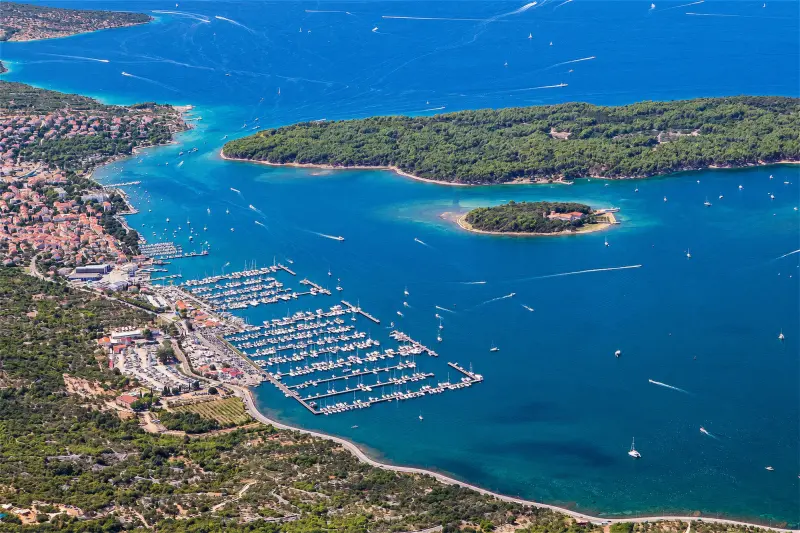
Punat is located on the island of Krk and offers direct access to the Kvarner sailing area. It is particularly attractive for crews who want to centre their holiday on sailing from island to island.
Krk, Cres, Rab, and Lošinj do not form one standard circular route. Wind direction, sea state, and the nature of the crew all influence which combination makes sense. Especially during Bora conditions, local differences between islands, channels, and coastal stretches can be considerable.
For families or crews with less experience in Croatia, Punat offers the advantage of building an itinerary around manageable daily legs. That said, Kvarner should not automatically be seen as a simple beginner’s cruising ground. Harbour manoeuvres, weather judgement, and alternative overnight options still require careful planning.
Biograd: Island Hopping in North Dalmatia
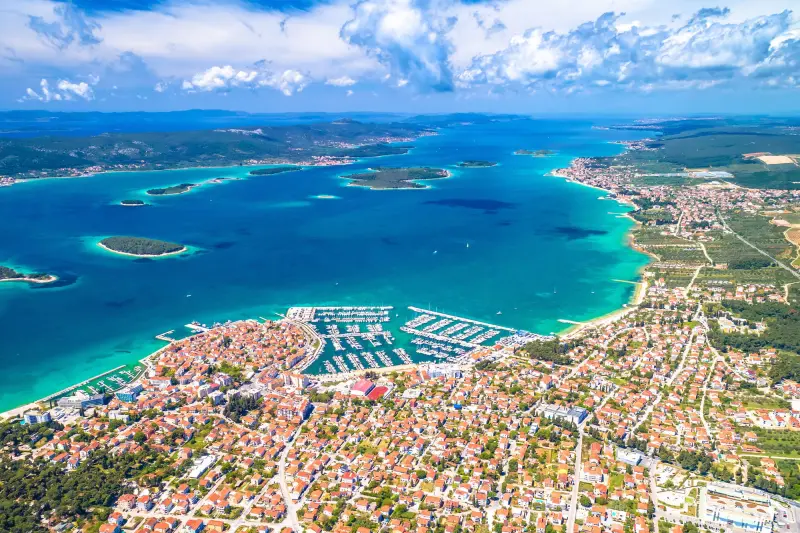
Biograd lies opposite the islands of Pašman and Ugljan and is one of the most versatile starting points for North Dalmatia. Further west lie additional islands and Dugi Otok, while the Kornati islands are to the south west. This creates a wide range of options within a standard charter period, without the need to stretch the route across great distances.
Its proximity to Dugi Otok, Telašćica, and the Kornati islands makes Biograd especially appealing for crews who want to combine island hopping with natural scenery and protected areas. However, the large number of islands should not be mistaken for a lack of nautical challenge. Narrow passages, shallows, local wind effects, and protected area regulations all require careful preparation.
Anyone planning to visit the Kornati islands should check the latest rules on entry, anchoring, and moorings before departure. These can change and may differ from one protected area to another.
Rogoznica: Between Šibenik and Central Dalmatia
Rogoznica lies between Šibenik and Split and therefore follows a different route logic from Biograd. To the north are the islands off Šibenik and the approaches towards the Kornati islands. To the south, further opportunities open up towards Central Dalmatia, depending on charter duration and weather.
For a one week charter, a more focused itinerary is often wiser than trying to link as many famous islands as possible. With more time, your cruising radius increases. Even so, the return leg, check out, and a sensible weather buffer should be considered from the outset.
Rogoznica is therefore especially attractive for crews who want the choice between more sheltered island passages and longer offshore legs. Destinations further south should always be assessed in relation to distance, weather, and the time available for the charter.
What about Split, Trogir, or Dubrovnik?
Split, Trogir, and Dubrovnik are among Croatia’s best known charter regions and naturally feature in many searches. However, in 2027 the Croatian charter bases operated directly by First Class Sailing are located in Pula, Punat, Biograd, and Rogoznica.
For this page, the key point is therefore which cruising grounds are realistically accessible from these four locations. If the current yacht search also shows yachts in other Croatian destinations, their base, operator, and availability should be checked carefully in the specific offer. A result for a region does not automatically mean that First Class Sailing operates its own base there.
Which Croatian sailing area suits which crew?
Families with children
For families, short daily passages, alternative harbours, a suitable yacht layout, and enough flexibility for changing weather are usually more important than covering the greatest possible distance. Biograd and Punat allow for many island combinations, while Pula and Rogoznica can also provide family friendly routes when daily mileage and weather are planned with care.
Your first yacht charter in Croatia
If this is your first charter in Croatia, it is best to choose a sailing area that matches your existing experience. This includes confident harbour manoeuvres, handling mooring lines, weather assessment, and navigation. A route with reserve days and alternative harbours is usually far more sensible than an ambitious plan built around numerous fixed destinations.
Experienced sailing crews
Experienced crews can plan for longer passages and cruising options that are more dependent on weather conditions. From Pula and Punat, wider distances in the northern Adriatic become possible, while from Rogoznica, longer legs towards Central Dalmatia may be particularly appealing. Even for highly experienced crews, the weather forecast should shape the route more than any prearranged island checklist.
Sailing Yacht, Catamaran, or Motor Yacht in Croatia?
Sailing yacht
A classic sailing yacht is ideal for crews who place great value on the sailing experience itself. Monohulls require less berth width than comparable catamarans and provide a more direct feel under sail. Yacht size, draft, and crew strength should all suit the region you plan to explore. An overview is available on the sailing yachts page.
Catamaran
Catamarans offer more interior and deck space and can be particularly appealing for families or larger crews. Their greater beam does, however, affect berth selection, harbour costs, and manoeuvring. A shallower draft can expand your options in some situations, but it does not replace proper checks of depth and cruising conditions.
First Class Sailing also offers catamarans in Croatia. Which models are available at which base and on which dates should always be checked in real time.
Motor yacht
Motor yachts shift the emphasis from sailing performance to speed and range. In return, fuel consumption, sea state, and operating costs become more significant. If this type of yacht is your preference for Croatia, you can review the general selection under motor yachts and then check current availability for Croatia.
Bareboat, with Skipper, or Fully Crewed?
Bareboat charter is suitable for crews who hold the required recognised qualifications and have sufficient practical experience for the yacht, cruising area, and intended route. Which certificates are accepted for a specific charter should always be confirmed before booking.
A skipper can be a wise choice if the crew does not yet know the area, would welcome support with harbour manoeuvres, or if the qualifications held are not sufficient for the yacht desired. Whether skippers are available, and under which conditions, depends on the individual offer.
On larger or more comprehensively equipped yachts, additional crew services may also become relevant. Here too, the terms of the respective charter offer apply.
Best Time to Travel for a Yacht Charter in Croatia
The Croatian charter season is concentrated around spring, summer, and early autumn. May and June often combine longer days with lower peak season demand. July and August are the busiest holiday months. September is especially attractive for many sailing crews, as the main school holiday period has eased while the Mediterranean can still feel thoroughly summery.
April and October can also offer worthwhile charter opportunities, but they require greater flexibility in terms of weather and daily planning. The ideal travel period therefore depends on your crew, the level of comfort desired, your budget, and your willingness to adapt to more changeable conditions.
Bora, Jugo, and Maestral in Route Planning
Weather along Croatia’s Adriatic coast is a practical factor in every routing decision. The Bora can blow strongly and in gusts from north easterly directions. The Jugo comes from the south to south east and can build up a sustained sea state over time. The summer Maestral often develops as a thermal wind, but it should never be treated as a daily certainty.
For charter crews, this means checking forecasts regularly, avoiding unnecessary commitments to exposed passages, and knowing the alternatives in terms of harbours or bays. Thunderstorms and passing fronts can also alter the day’s plan at short notice.
Marinas, Mooring Fields, and Anchorages
Croatia offers several different forms of overnight stop. Depending on location, marinas provide berths, electricity, water, and further shoreside infrastructure. In many harbours, stern to mooring with mooring lines is standard practice. If you are unfamiliar with these manoeuvres, it is advisable to clarify the specific procedure during the handover.
Mooring fields can be an alternative to a marina, but they are not a uniform or free public facility. Fees, rights of use, and conditions vary from place to place.
Free anchoring is not permitted everywhere either. Protected areas, harbour zones, or local regulations may restrict anchoring. Current charts, nautical information, and local rules therefore remain decisive.
Kornati, Telašćica, and Other Protected Areas
Protected areas are among the most important planning factors, especially on itineraries starting from Biograd. Kornati National Park and Telašćica Nature Park each have their own access rules, stay regulations, and in some cases anchoring provisions. Depending on your route, other protected areas may also be relevant.
Entry systems, fees, and permitted anchoring or mooring zones can change. They should therefore be checked immediately before departure using the current official park information. A protected natural area is not an unrestricted anchorage.
Navigation, Draft, and Beam
Croatia’s many islands create a wealth of route options, but they also bring narrow passages, shallows, and highly variable local conditions. The yacht’s draft and beam influence which harbours and berths are practically suitable.
Catamarans, for example, require significantly more berth width than monohulls. On deeper draft sailing yachts, water depth and access become even more important. Current charts, pilot books, navigational warnings, and local information always take precedence over general descriptions of the area.
How to Plan a Sensible Croatia Itinerary
Realistic route planning begins with the base and the cruising area. Only then should individual islands and harbours be selected. A crew departing from Biograd will plan very differently from one starting in Punat or Pula.
- Take check in and return times into account when calculating your actual cruising time.
- Match daily legs to both crew and yacht.
- Plan at least one alternative for key overnight stops.
- Leave a weather margin for Bora, Jugo, thunderstorms, or unsuitable sea state.
- Check protected area regulations in good time.
- On longer passages, take fuel, water, and provisions into account.
A successful Croatia yacht charter is created by the right combination of cruising ground, yacht, crew, and weather. The number of islands visited is not a meaningful measure of quality.
What Does a Yacht Charter in Croatia Cost?
A blanket weekly price would say very little. Charter costs depend on factors such as season, base, yacht type, size, number of cabins, year of build, equipment, charter duration, and current availability.
In addition to the charter fee itself, further charges may apply depending on the offer. These can include the security deposit or deposit waiver, final cleaning or charter pack, bed linen, outboard engine, additional water sports equipment, skipper, fuel, marina berths, mooring fields, park entry fees, parking, and provisions.
Not every item applies to every yacht. The specific offer breakdown is therefore the only binding basis. For a realistic total price, mandatory services and desired extras should always be considered together with the charter fee.
When Should You Book a Yacht in Croatia?
If you are set on a particular holiday period, a specific base, a certain yacht layout, or a catamaran, booking early will usually work to your advantage. Above all, early booking increases your range of choice; it does not automatically guarantee the lowest price.
If your travel dates are flexible, suitable offers may also be available later. The more fixed your dates, base, yacht size, and number of cabins are, the more important it becomes to check current availability.
Travel to the Four Croatian Bases
Your choice of base also affects how you travel. Pula lies in northern Istria and can be especially attractive for those arriving by car. Punat on Krk can likewise be incorporated easily into travel plans through the northern Adriatic region.
Biograd is often reached via the Zadar area. For Rogoznica, depending on your mode of transport and connection, the transport links between Šibenik and Split are particularly relevant. Flight schedules, transfers, parking options, and the final part of the journey should always be checked for your exact travel dates.
Licence and Radio Certificate for Bareboat Charter
For a bareboat charter, it is essential to clarify which qualifications are recognised for the specific yacht. Relevant factors may include the sailing licence or certificate of competence, radio qualification, the yacht’s flag state, as well as the requirements of the charter company and the insurer.
The Croatian authorities maintain lists of recognised foreign certificates of competence. Even so, validity should still be checked for the individual charter. Holding a licence also does not replace the practical experience that may be required for a particular yacht or for more demanding weather conditions.
Why Choose First Class Sailing for Yacht Charter in Croatia?
First Class Sailing is an owner managed charter company with more than 50 years of experience in yacht charter. In Croatia, the company will operate its own bases in Pula, Punat, Biograd, and Rogoznica in 2027. This allows First Class Sailing to bring its long standing charter expertise to a range of distinct Croatian sailing areas.
The concept includes well maintained yachts and catamarans, personal support on site, professional handovers, and a clear, manageable base structure. At the same time, the four bases offer a genuine choice of cruising grounds rather than purely remote brokerage without direct operational presence.
If you already know your travel dates, crew size, and preferred region, you can check suitable offers directly via the yacht charter search.
Croatia FAQ
That depends on your crew and your cruising plans. Pula is the gateway to Istria and the northern Adriatic, Punat to the Kvarner region, Biograd to North Dalmatia and the Kornati islands, and Rogoznica to the wider Šibenik area with options towards Central Dalmatia.
Yes, provided the region, yacht, and route match the crew’s experience. However, Croatia should not automatically be seen as an easy beginner’s destination. Harbour manoeuvres, weather assessment, and navigation all require practical experience.
Families should generally prioritise short daily legs, alternative harbours, a suitable yacht layout, and flexible routing. Biograd and Punat offer many island combinations, although the other bases can also work well with careful planning.
North Dalmatia from Biograd and the Kvarner region from Punat both offer an especially rich island landscape. Even so, the exact route should always be planned in line with the weather, charter duration, and the crew.
Sailing yachts are especially well suited to crews who place a strong emphasis on the sailing experience and they require less berth width. Catamarans provide more living and deck space, but they need wider berths and may involve higher marina costs.
May, June, and September are appealing for many crews because they fall outside the busiest holiday periods. July and August are the classic peak season months. April and October usually require greater flexibility with weather and daily planning.
Both wind systems can significantly affect your route and overnight stops. Forecasts should be checked regularly, and alternative legs should be planned whenever stronger conditions are expected.
Skippers can be booked for certain yachts and dates, subject to availability. The exact options and terms should always be checked for the individual offer.
Possible extra costs include the security deposit, charter pack or cleaning, skipper, fuel, marina and mooring fees, protected area entry charges, parking, provisions, and optional extras. The exact cost structure varies by yacht and by offer.
No. Protected areas, local regulations, and designated zones may restrict or prohibit anchoring. Before every cruise, current nautical information and local rules should be checked carefully.
The national park has its own access and stay regulations, along with designated areas for navigation, anchoring, and overnight stays. Current rules and fees should be checked shortly before your visit.